I will admit I haven't seen a lot of the U.S., and I've only been in a manicurist's shop once, with Holly. But this seemed wrong.
Perhaps it's because I live in the relatively wild west, but do American men really get many manicures? And is "Andy" a Vietnamese name?
I think the place was in Staines, though it might have been Ashford. And I'm going on very little personal experience about manicures or the U.S., so this is much more disclaimer than manicure.
Notes before, during and after my 2011 visit to Scotland, England, Brittany and Northern Ireland.
Wednesday, July 6, 2011
Stiles and Gates
I might add to these later.
The first stile I remember seeing was in a rural, oak-tree-darkened part of Texas where there were dead armadillos and acorns on the ground. We were visiting a friend of my moms, and I was a little girl, maybe four or five. The stile was like the stairs up to a trailer house, but went up and down. They were regular stair height, with hand rails, and a landing on top. Probably three or four steps on each side, perfectly symmetrical.
In the back corner of the place I grew up on in Española, there was a stile, in the corner of a barbed-wire fence made with cedar posts (solid posts, not thin things). I never took a picture of it, but I could probably draw it badly and get an artist to make it right. It involved boards nailed between the corner post and the first support, which was about three feet from it. In the corners of barbed wire fences, there are diagonal wires to hold the force of the fence turning a corner. It was a dangerous ladder with strands of barbed wire inside, up and down a fence about four feet high. It was safe in jeans and boots, but not for little girls in dresses and sandals. BUT anyway... it created a curiosity in me about the range of fence-crossings.
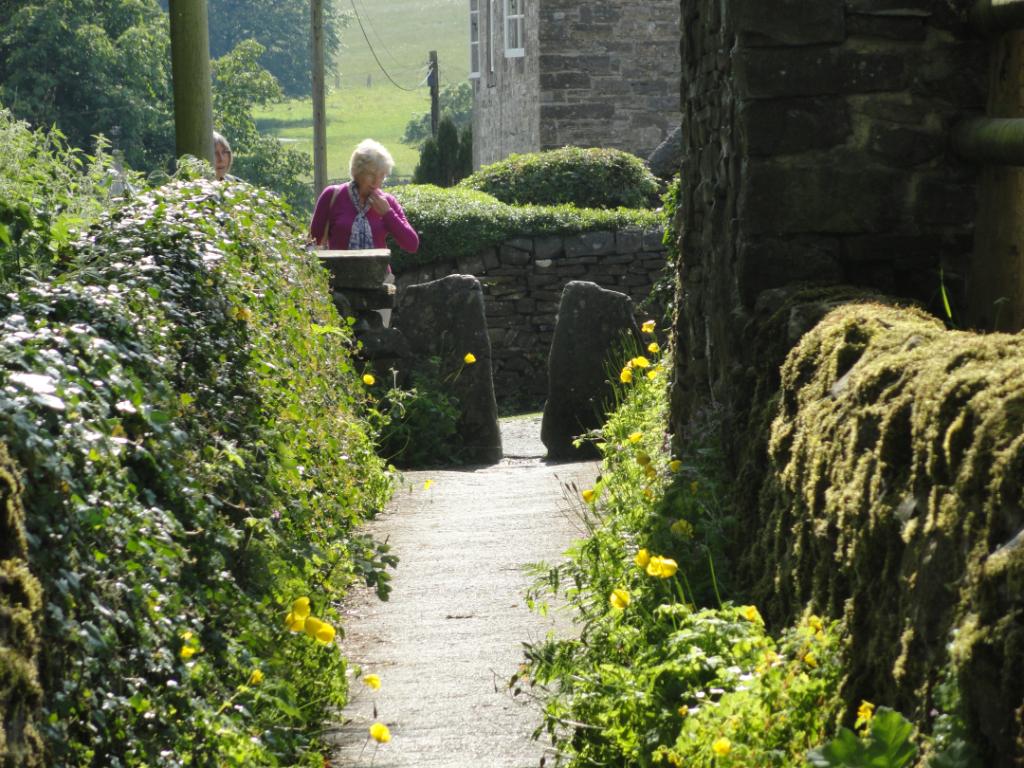
Here are some traditional (and some maybe just serviceable) things I've seen here, and I'll add to it.
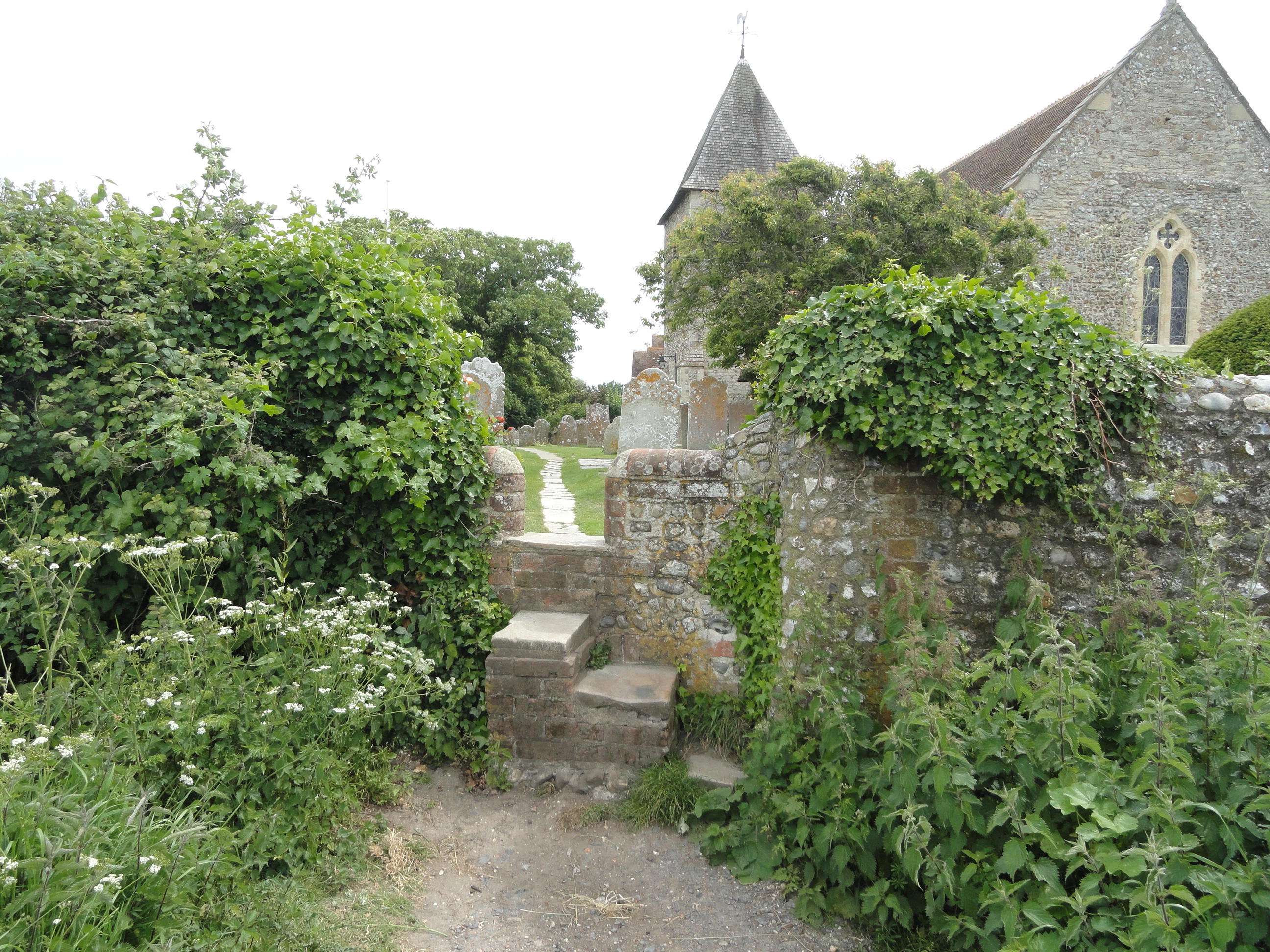
The first two are the same stile from opposite sides. The churchyard ground was higher than the field below, which had sheep.

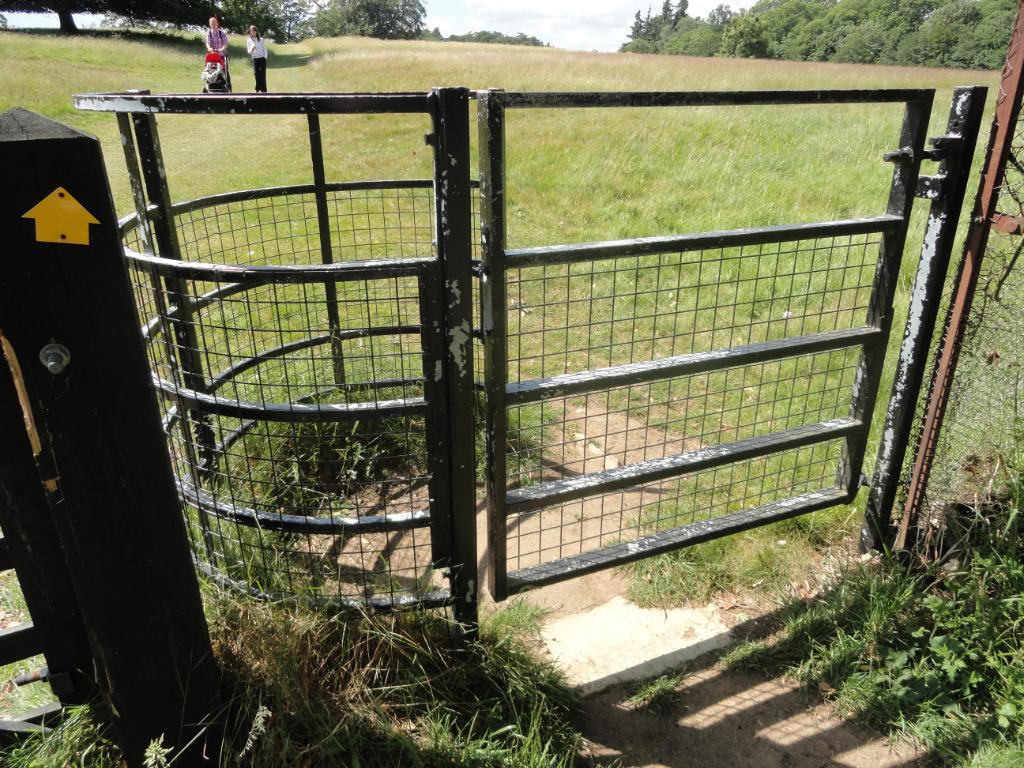
A kissing gate, near Leeds Castle, made of steel. Most are wooden. It's a moveable fence section people can get through but animals can't. They don't involve climbing.
The next four are at Tissington, an estate (not quite a village) in Derbyshire:
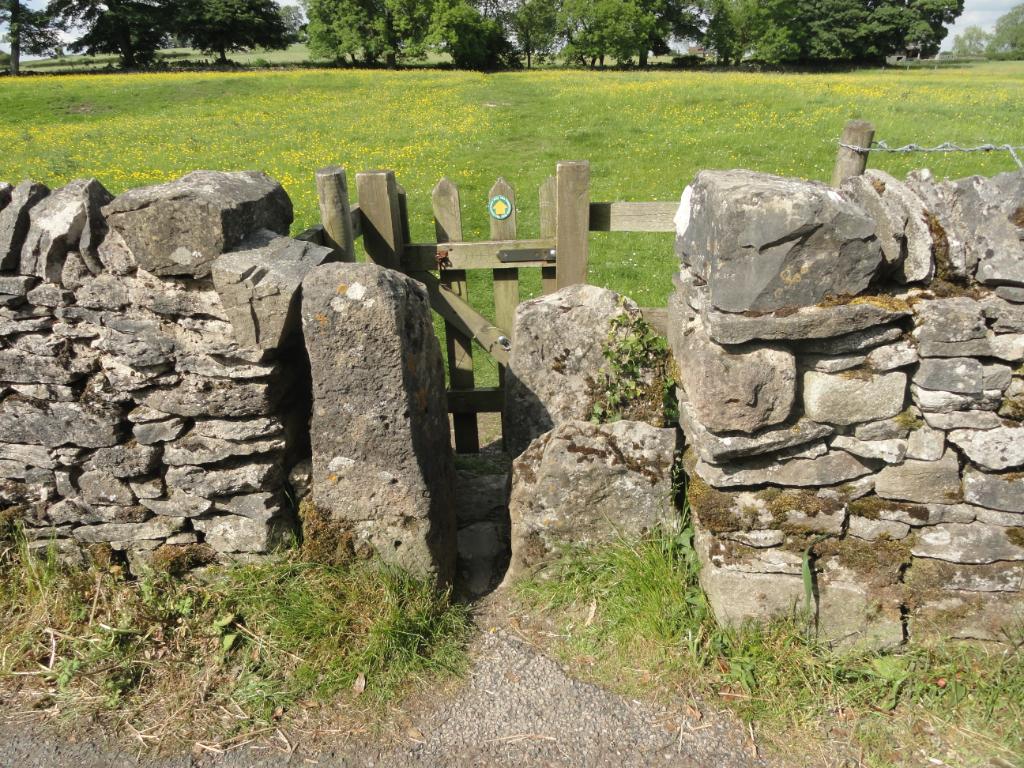
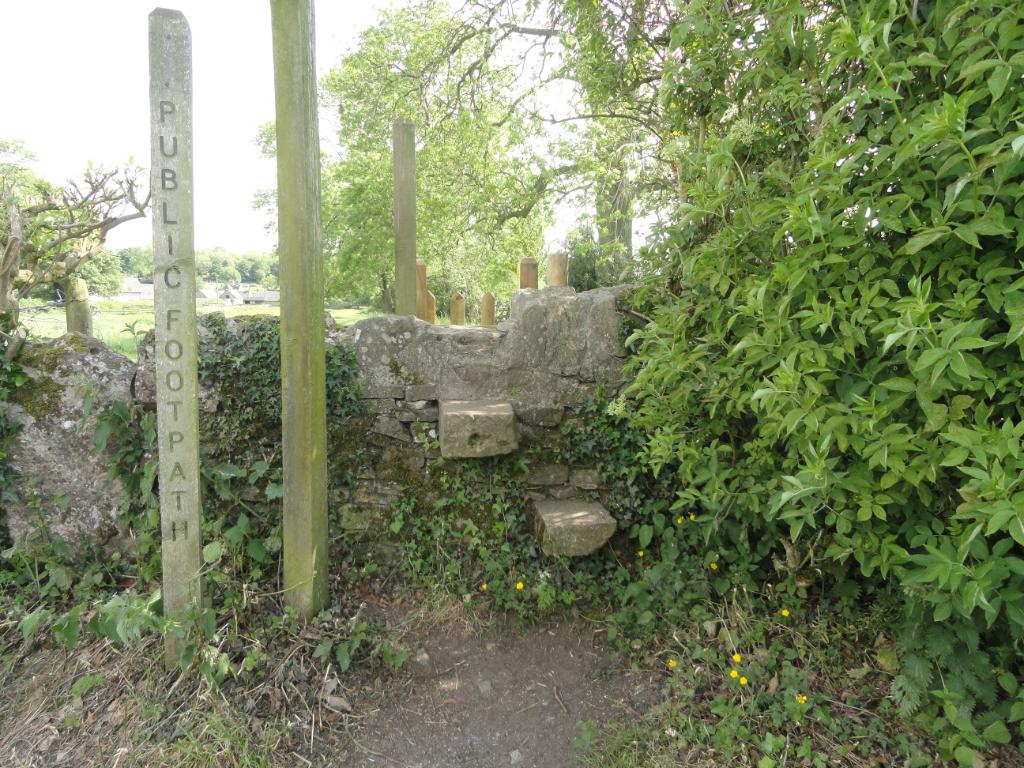
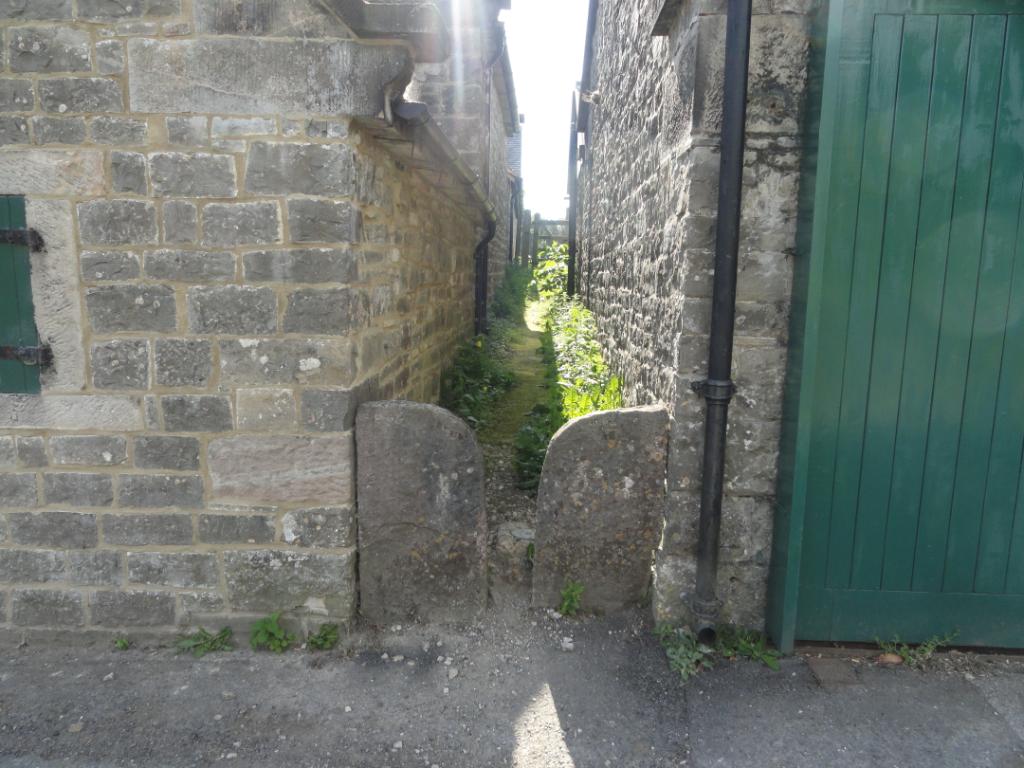
a squeeze stile

To Be Continued...
The first stile I remember seeing was in a rural, oak-tree-darkened part of Texas where there were dead armadillos and acorns on the ground. We were visiting a friend of my moms, and I was a little girl, maybe four or five. The stile was like the stairs up to a trailer house, but went up and down. They were regular stair height, with hand rails, and a landing on top. Probably three or four steps on each side, perfectly symmetrical.
In the back corner of the place I grew up on in Española, there was a stile, in the corner of a barbed-wire fence made with cedar posts (solid posts, not thin things). I never took a picture of it, but I could probably draw it badly and get an artist to make it right. It involved boards nailed between the corner post and the first support, which was about three feet from it. In the corners of barbed wire fences, there are diagonal wires to hold the force of the fence turning a corner. It was a dangerous ladder with strands of barbed wire inside, up and down a fence about four feet high. It was safe in jeans and boots, but not for little girls in dresses and sandals. BUT anyway... it created a curiosity in me about the range of fence-crossings.
Here are some traditional (and some maybe just serviceable) things I've seen here, and I'll add to it.
The first two are the same stile from opposite sides. The churchyard ground was higher than the field below, which had sheep.


A kissing gate, near Leeds Castle, made of steel. Most are wooden. It's a moveable fence section people can get through but animals can't. They don't involve climbing.

The next four are at Tissington, an estate (not quite a village) in Derbyshire:


To Be Continued...
Tuesday, July 5, 2011
A car like a sidecar
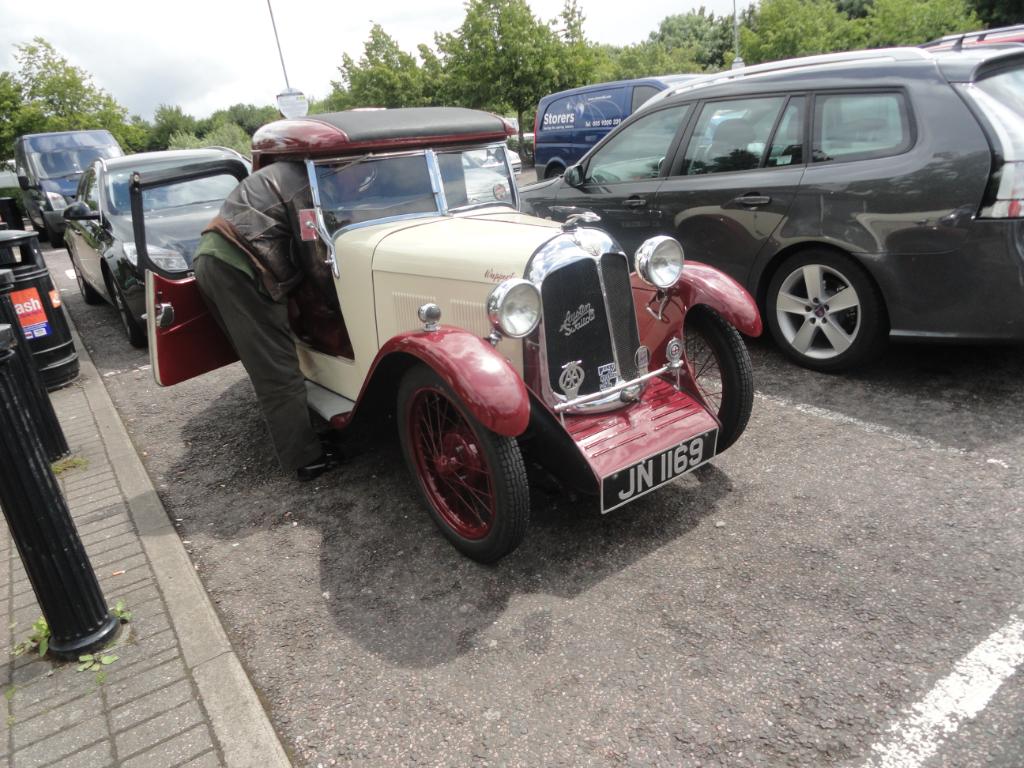
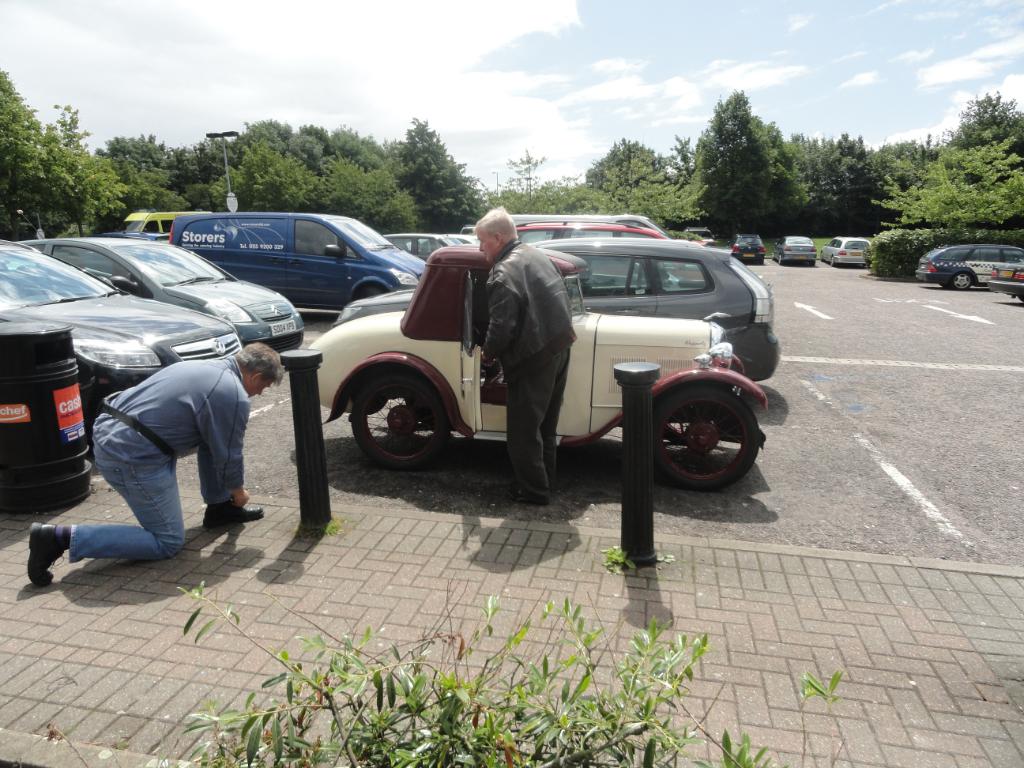
June 7, we saw a car in the carpark at a motorway service area [food-and-bathroom stop (better than the rest stops off the interstates where I live)] we saw an old car. The owner came out while we were looking at it and answered some questions, but the only one I remember is that the reason the back end was so pointy and round and didn't open is that the car was based on the design of a motorcycle sidecar. And the backs of those are that way. So there.


You've probably noticed I didn't get a shot of the back end. I thought I had, but then later I looked at the photos.
So I googled a bit until I found this image, and article. I thought it might have been the same guy and same car, at first, but upon comparison, I don't think so. One has a hard top and the other doesn't.
Austin Swallow: Still purring after eight decades
Here's an older photo of one with a hard top. The article is in French.

Portrait : Sir William Lyons, un sacerdoce à Coventry
Here's part of an article, in English, with another couple of photos: The coachbuilding side of Lyon's business... first started production under the name of the Swallow Sidecar and Coachbuilding Company. Its initial model was the Austin Swallow 2-seater in late 1926 from a company now with 30 employees. The rather plain Austin Seven original was transformed with a long tail, restyled front wings and a magnificent radiator with chrome surround. The instruments were encased in a mahogany panel and the occupants similarly in leather - the wood and leather tradition had started! Priced at at £175, or £185 with a hinged hardtop, it proved very popular.
(So the hard-top we saw was the £10-more-expensive luxury model.)


You've probably noticed I didn't get a shot of the back end. I thought I had, but then later I looked at the photos.
So I googled a bit until I found this image, and article. I thought it might have been the same guy and same car, at first, but upon comparison, I don't think so. One has a hard top and the other doesn't.
Austin Swallow: Still purring after eight decades
Here's an older photo of one with a hard top. The article is in French.

Portrait : Sir William Lyons, un sacerdoce à Coventry
Here's part of an article, in English, with another couple of photos: The coachbuilding side of Lyon's business... first started production under the name of the Swallow Sidecar and Coachbuilding Company. Its initial model was the Austin Swallow 2-seater in late 1926 from a company now with 30 employees. The rather plain Austin Seven original was transformed with a long tail, restyled front wings and a magnificent radiator with chrome surround. The instruments were encased in a mahogany panel and the occupants similarly in leather - the wood and leather tradition had started! Priced at at £175, or £185 with a hinged hardtop, it proved very popular.
Masks for sale
There are "fancy dress" things for sale all the time here, and in a train station these were for sale:
I note that Catherine, the Duchess of Cambridge, has the respect and dignity of not having had a price tag stuck between her eyes or somewhere, as her new relatives have had.
Around the corner, Mr. Bean and President Obama:
I note that Catherine, the Duchess of Cambridge, has the respect and dignity of not having had a price tag stuck between her eyes or somewhere, as her new relatives have had.
Around the corner, Mr. Bean and President Obama:
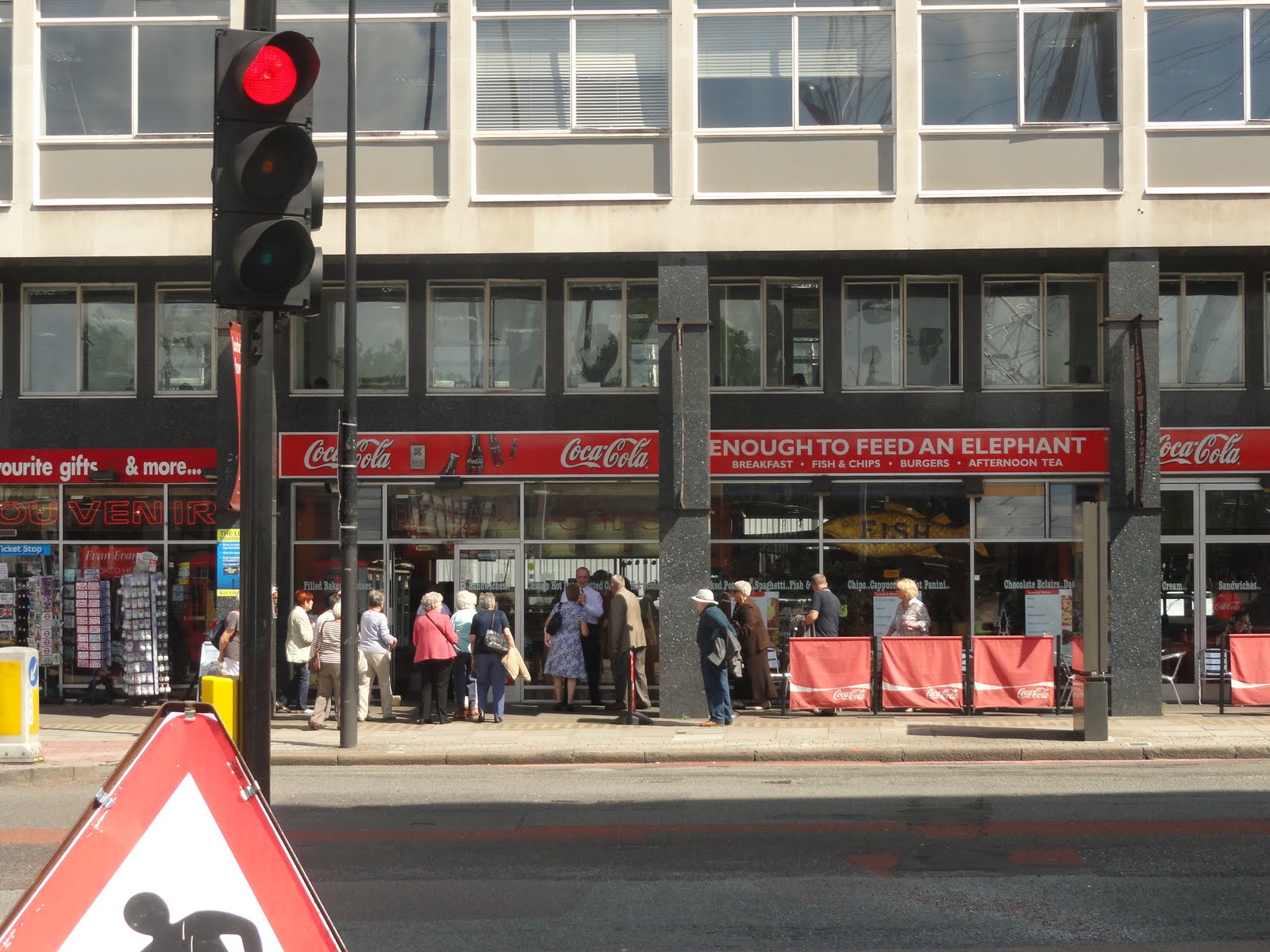
Casual menus, in London AND "chilli"
Nothing in here is actually "a menu" but still...
In the train station, Waterloo:
Around the corner from there:
The "chilli" might be followed up on. When we were at the Jane Austen tearoom in Bath, I asked what kind of chilli (about a sweet corn and chilli soup) and the waitress went to ask. She came back and said "regular chilli." Then at a roadside McDonald's I saw something that said chili, and it looked green, and it was chopped up jalapeño, so... I don't know.
Not a menu,but interesting:
And in Burger King at Waterloo Station (where I got a fish sandwich, because I know that one, and I was hungry):
In the train station, Waterloo:
Around the corner from there:
The "chilli" might be followed up on. When we were at the Jane Austen tearoom in Bath, I asked what kind of chilli (about a sweet corn and chilli soup) and the waitress went to ask. She came back and said "regular chilli." Then at a roadside McDonald's I saw something that said chili, and it looked green, and it was chopped up jalapeño, so... I don't know.
Not a menu,but interesting:
And in Burger King at Waterloo Station (where I got a fish sandwich, because I know that one, and I was hungry):
The view through a castle

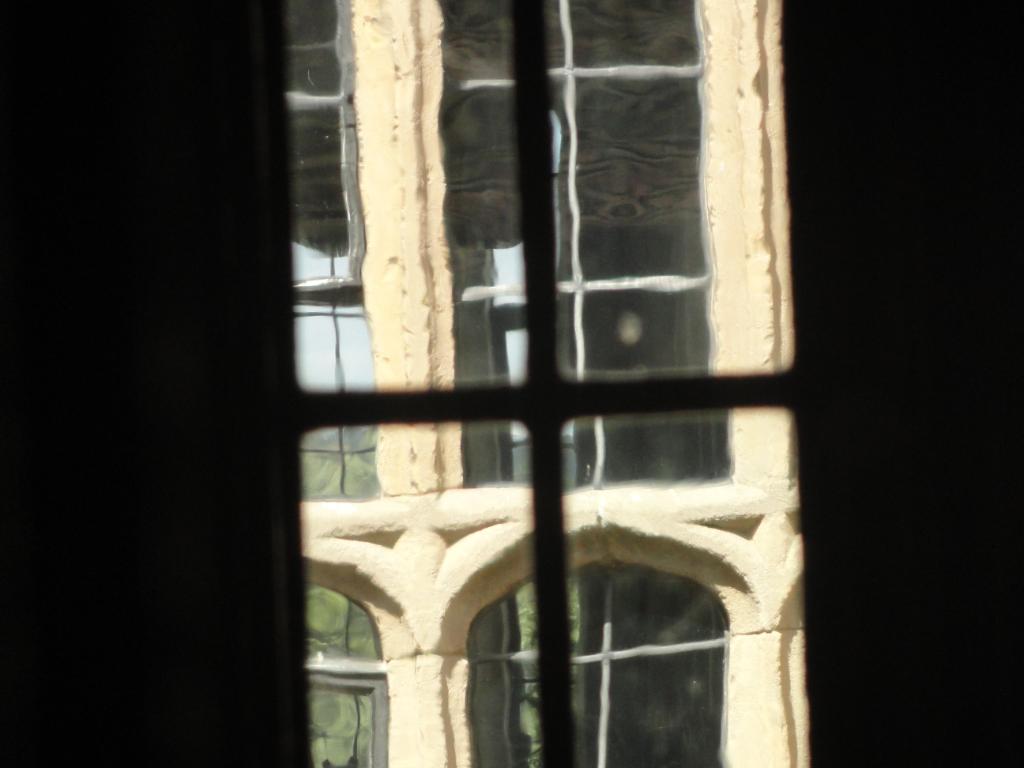
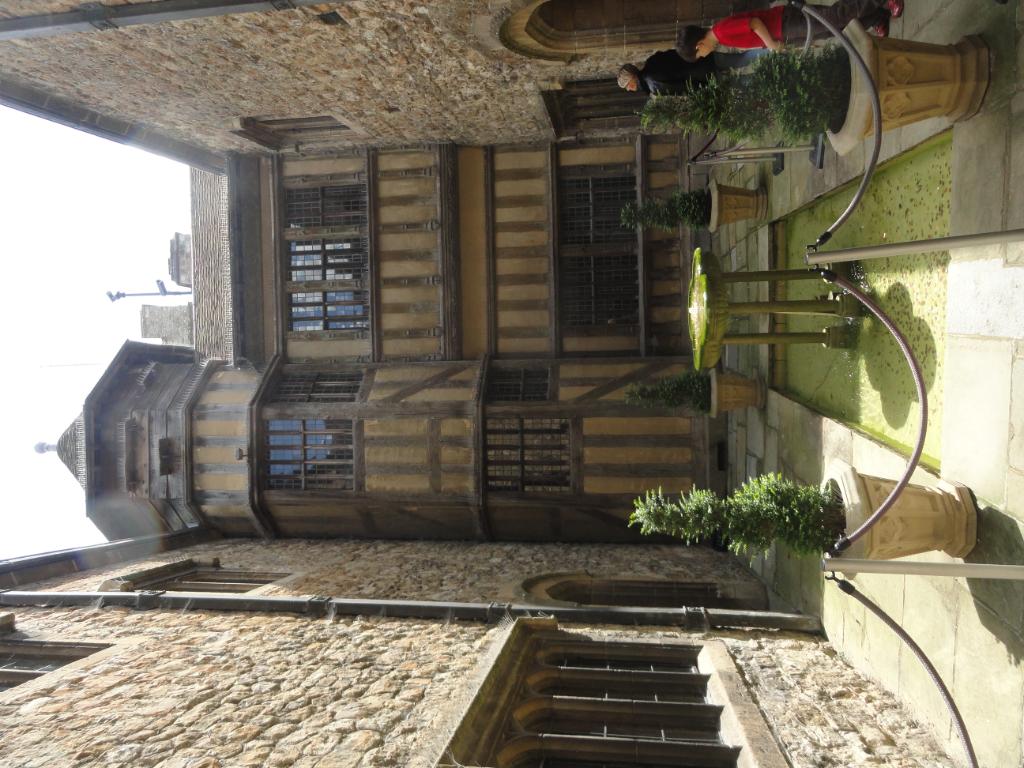
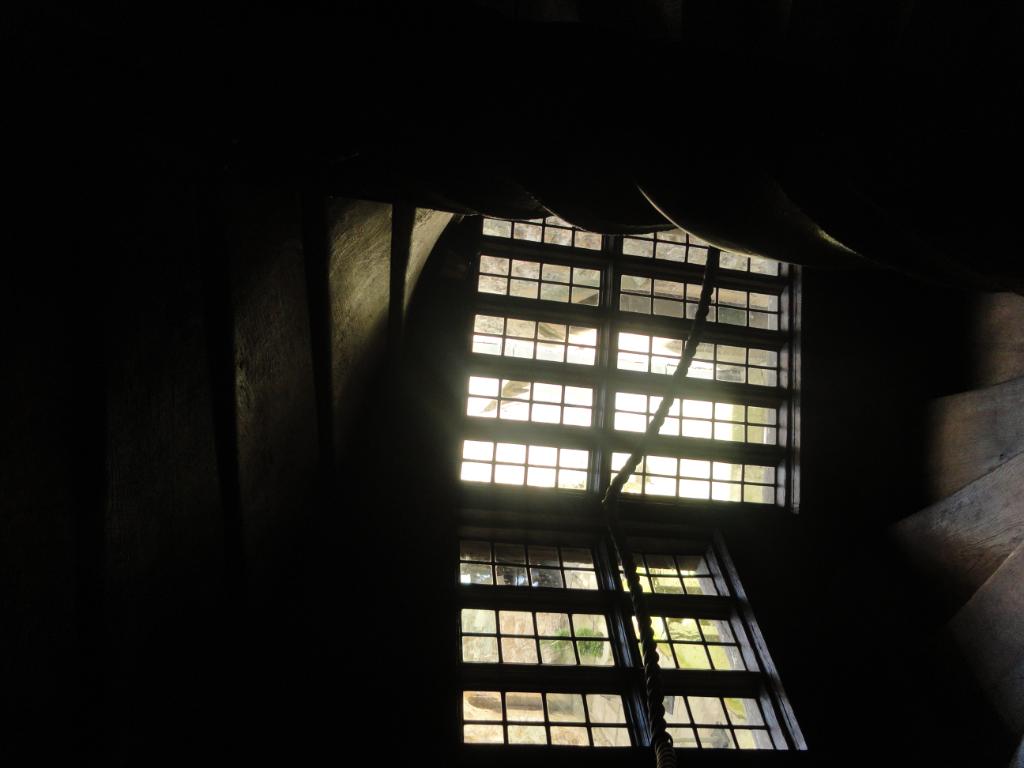
This is the view from high on a wooden staircase inside one section of Leeds Castle. Through the windows, across a courtyard, in other windows, out other (newer) windows on the far side.
Here's the courtyard. I took the photo from the upper left windows in that roundish part, which held the stairs shown below.

I didn't want to use the flash. So you can use your imagination. The stairs were wide, and spiral with some straight sections, and a steep handrail, all wooden.

The stairs at Helene and Leon's house in Brittany were similar but smaller, plainer, and carpeted. :-) But with the triangular steps on the turns and rectangular on the straightaways.
Castle Doors with Combination Locks
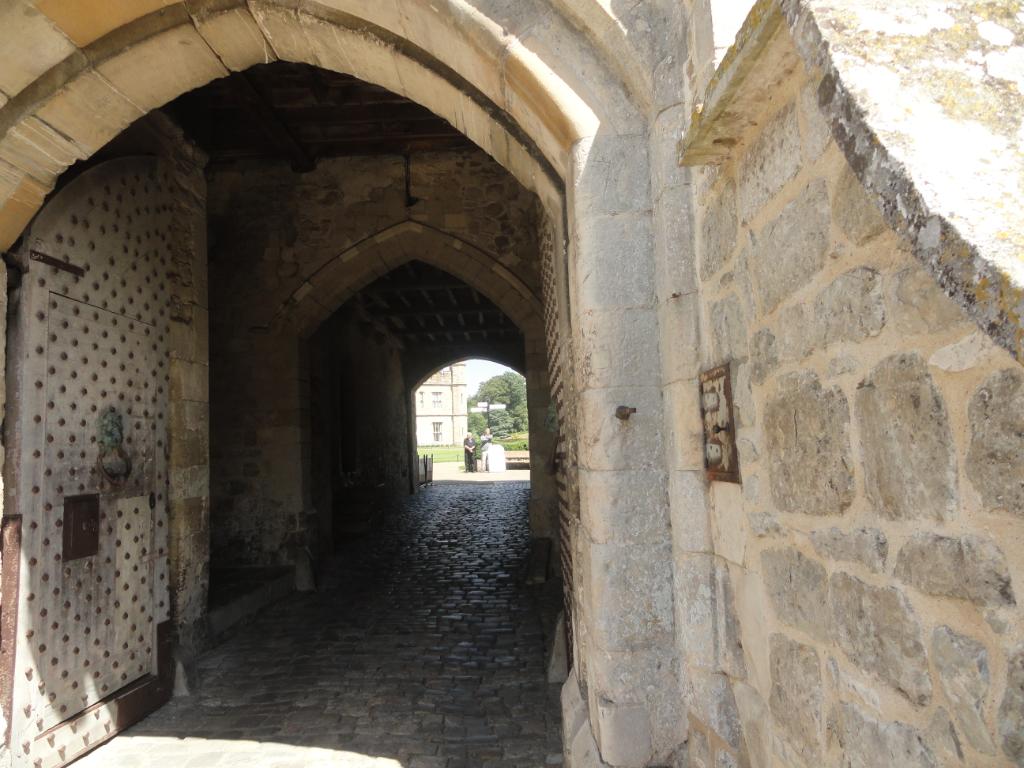
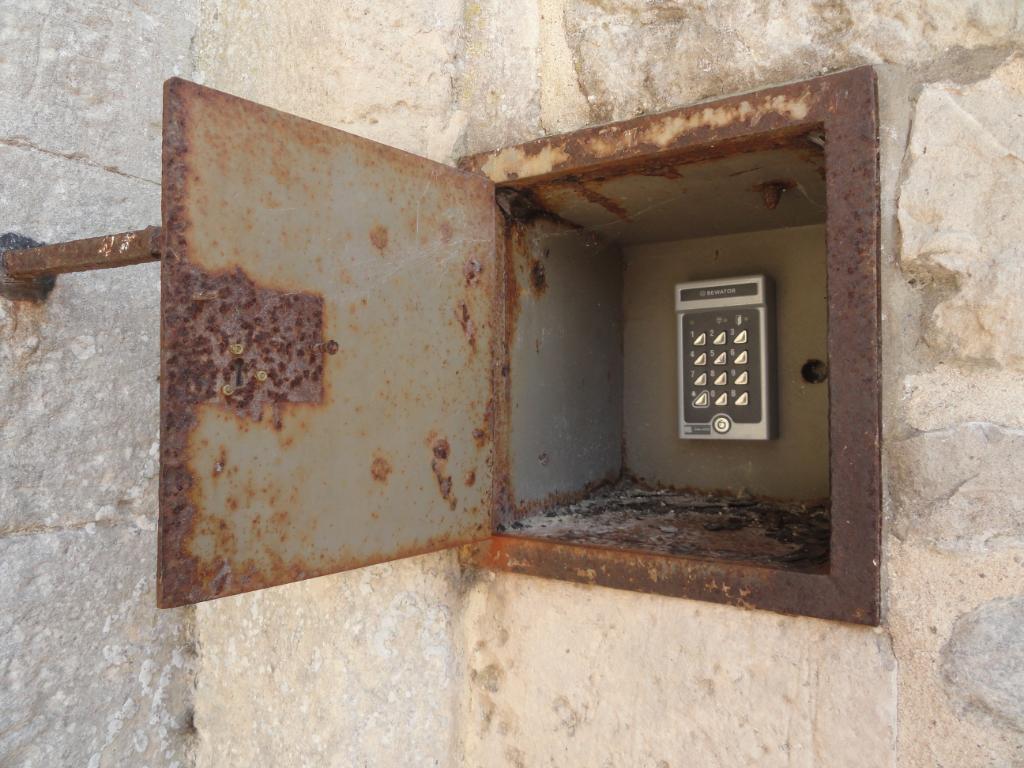
I don't remember if this had a portcullis or not. Some still did and some didn't. But I did bravely open that little door on the side, on the right there.

It had the mechanism by which the door was opened, or at least unlocked. I really like it.
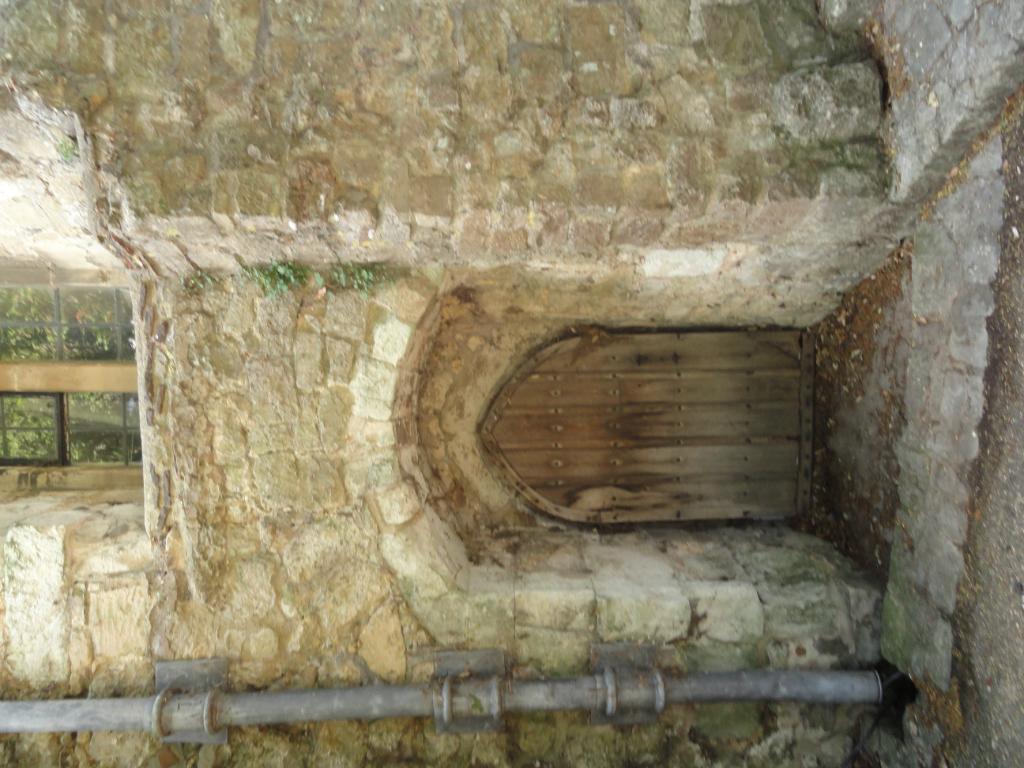
But even more than big gates into giant walls, I'm intrigued by little doors in obscure corners.

Those were all at Leeds Castle, which isn't in or near Leeds.

It had the mechanism by which the door was opened, or at least unlocked. I really like it.
But even more than big gates into giant walls, I'm intrigued by little doors in obscure corners.

Those were all at Leeds Castle, which isn't in or near Leeds.
Subscribe to:
Posts (Atom)